

Does a Lesson Video Deepen Social Studies Thinking?
The lights go down. A five-minute animated film follows a caravan carrying incense across the desert to a busy port. Students are hooked. When it ends, the teacher asks what they learned. “Camels carried spices,” says one. “It was really far,” says another.
Everyone paid attention, but they only took away recall.
Most curriculum packages now come with video, so the question for anyone doing social studies digital resources evaluation is not whether there are videos. It’s whether the videos make students think harder about history, geography or civics, or just make the lesson feel more modern.
What the research says, and what it doesn’t
A widely cited review by Cynthia Brame, Effective Educational Videos, brings the multimedia learning research together into three elements: cognitive load, student engagement and active learning.
A few findings stand out:
- Length: Citing Guo and colleagues, the review reports that median engagement time for videos under six minutes was close to 100%.
- Weeding: It recommends removing “interesting but extraneous information that does not contribute to the learning goal.”
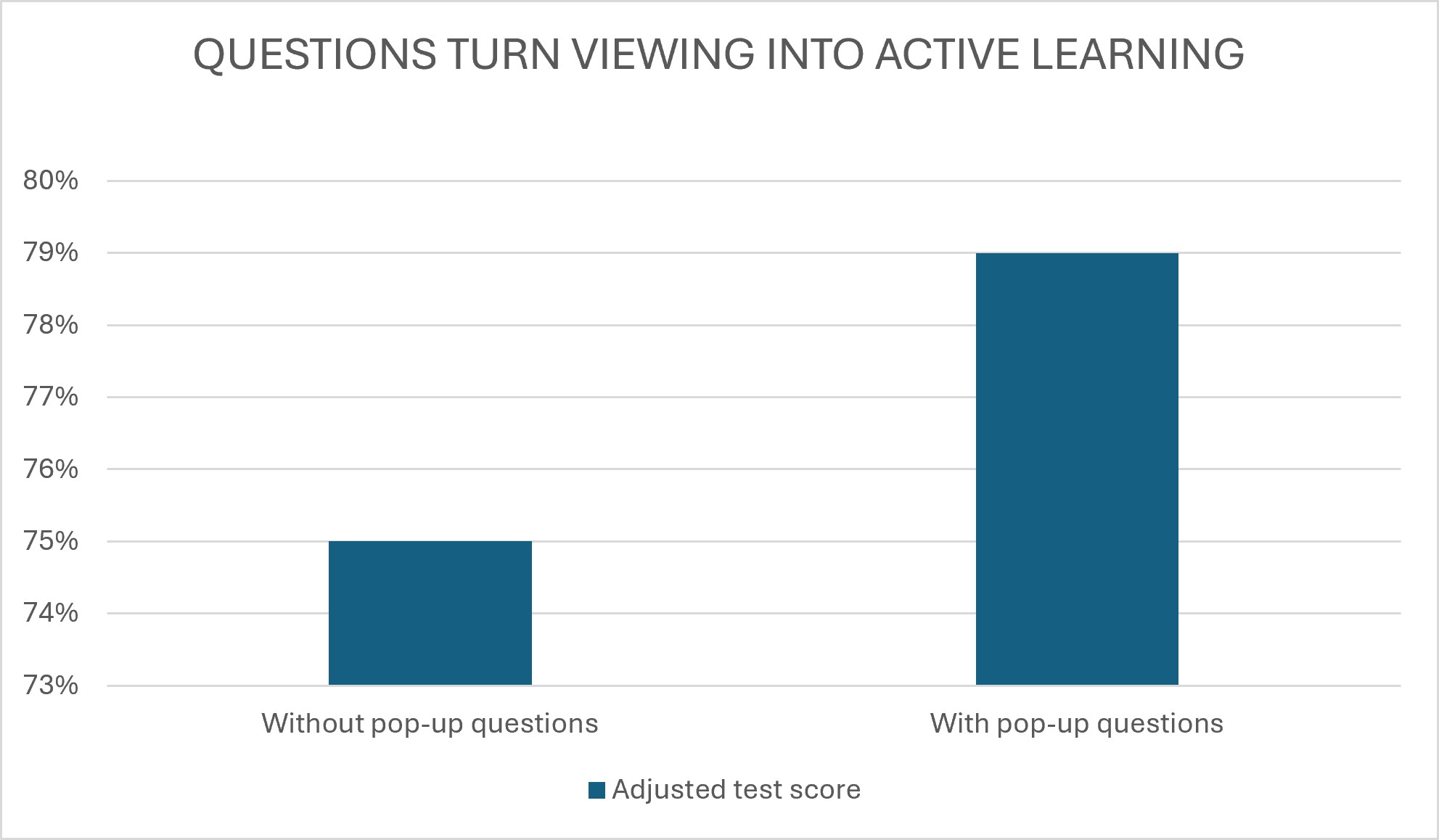
- Guiding questions: Students who answered guiding questions while watching scored significantly higher on a later test.
One caution. Much of this evidence comes from higher-education and science settings. The principles are well supported, but schools should treat them as strong guidance for K-12 social studies, not as proven results for every age group.
The social studies problem other subjects don’t have
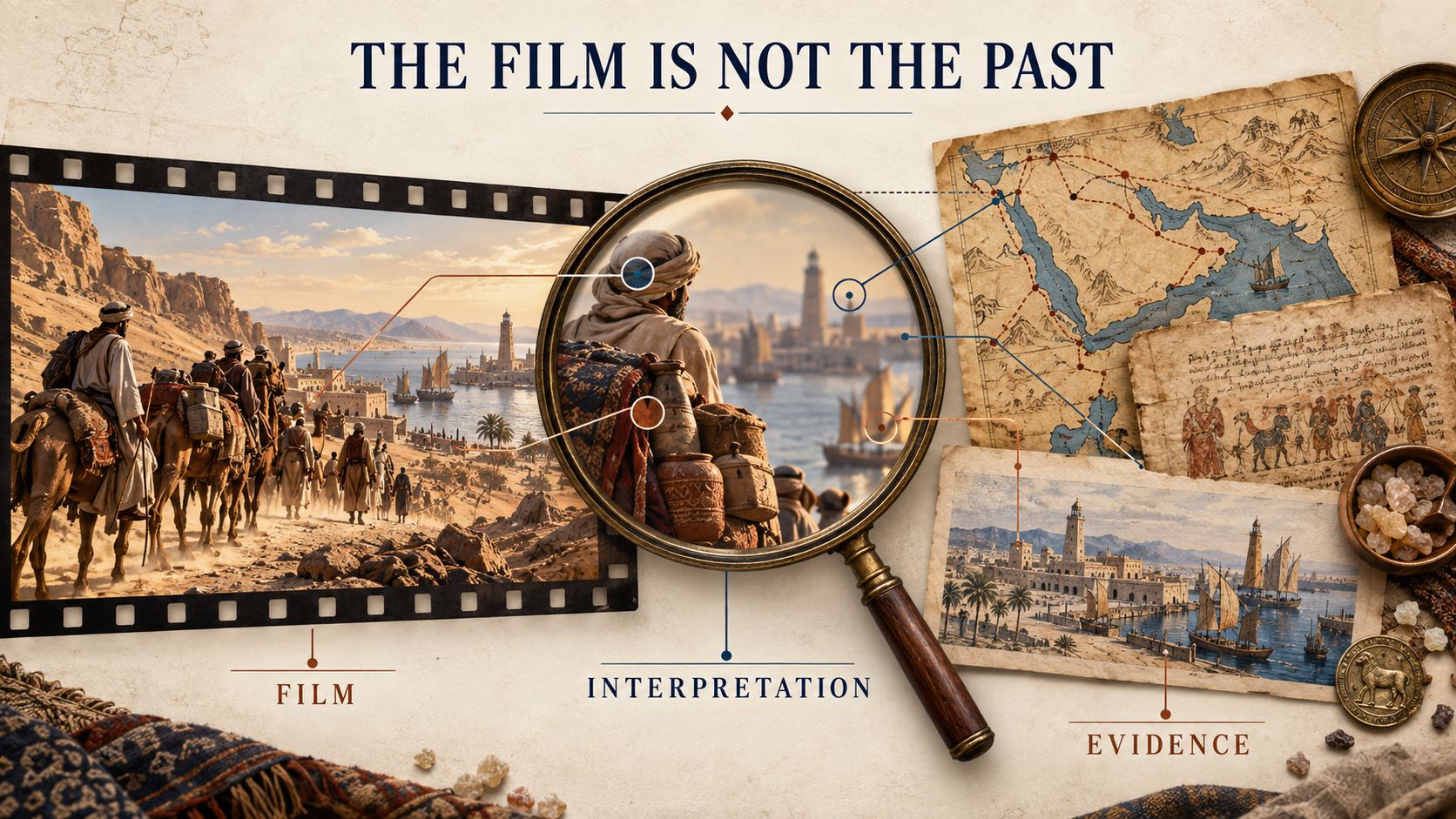
In science, a video explaining photosynthesis explains a settled process. In history, an animated scene of a caravan, a battle or a founding moment is a reconstruction. Someone chose what to show, whose voice narrates, what to leave out.
Students often treat a film as neutral truth, even more than they would a textbook paragraph. So a good social studies video lesson asks students to treat the film the way they would treat a source: who made this, what does it emphasise, what would another account add? This is also where video and media literacy meet.
A practical evaluation checklist
| Question to ask | Weak lesson video | Strong lesson video |
| Purpose | “Covers the topic” | Serves one clear learning goal |
| Length | 10–15 minutes of general content | Short and focused, one concept |
| Focus | Extra facts and dramatic filler | Non-essential detail removed |
| Signalling | Key ideas go past unnoticed | Key terms and moments highlighted on screen |
| Student task | Watch, then “any questions?” | Guiding question before or during viewing |
| Perspective | One voice presented as the only story | Opens space to ask whose view it shows |
| Link to lesson | Stands alone | Feeds straight into the next activity |
Use this table alongside a broader review of the curriculum. See how to evaluate a social studies curriculum.
If students could skip the video and still complete every task in the lesson, what role is the video really playing?
Three uses that actually deepen thinking
- As an opener with a question. Show a short clip, then pose the lesson’s inquiry question: Why did this port grow rich while inland towns did not? The video becomes the starting evidence, not the answer.
- As mid-lesson evidence. Pause the video and ask students to predict, compare or check it against a map or document.
- As review at home. Short films students can rewatch help with consolidation, as long as there is a small task attached.
Video is not the only digital tool that needs this discipline. The same test, does the tool create reasoning or replace it?, applies to GIS in school geography. It is also why teacher guidance matters so much. A video without suggested questions often ends up as a break. See [Blog 53 | What Good Teacher Support Materials Look Like for a Social Studies Curriculum | Linked text: “social studies teacher support materials”].
FAQs
Q: Do lesson videos improve learning in social studies?
A: They can, but it depends on design and use. Research points to short, focused videos with guiding questions and an active task as the conditions that matter most.
Q: How long should a lesson video be?
A: Short. Research cited by Brame (2016) found near-complete engagement for videos under six minutes. One concept per video is a good rule.
Q: Should history videos be treated as sources?
A: Yes. Animated or dramatised history is an interpretation. Asking who made it and what it emphasises builds historical thinking.
Q: What should buyers look for in curriculum videos?
A: Clear links to lesson goals, short runtime, suggested questions for teachers, and a task that follows the video.